Key Takeaways
- The West has lost control over manufacturing supply chains and critical mineral supply chains to China
- China's stricter export controls over rare earths and tungsten have led to a push for metal additive manufacturing (AM) in the US
- Reshoring manufacturing supply chains requires reshoring critical minerals supply chains
- Recycling capabilities are crucial for securing metals sources and reducing reliance on primary mining
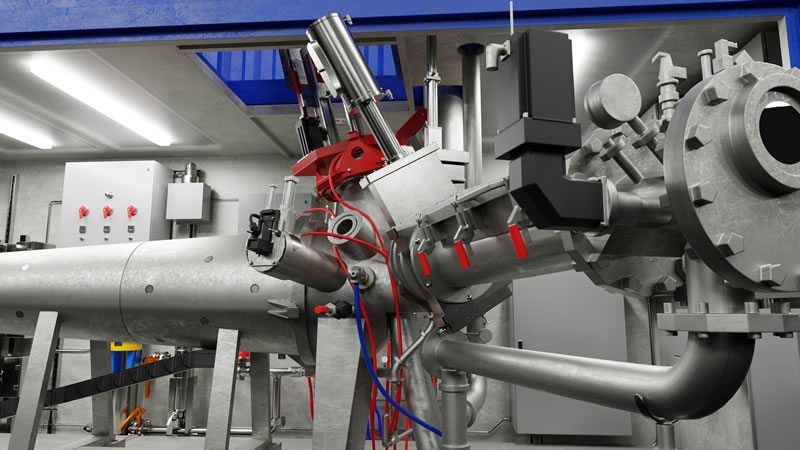
- Continuum Powders' Greyhound Melt-to-Powder (M2P) system is a proprietary technology for sustainable metal powder production
Introduction to the Problem
The West has been ceding control over manufacturing supply chains to China for decades, with a similar trend observed in critical mineral supply chains. This has led to a loss of control over essential materials, including rare earths, tungsten, and even common metals like aluminum. China's imposition of stricter export controls has exacerbated the issue, prompting the US to explore alternative solutions, such as metal additive manufacturing (AM).
The Role of Metal AM in Reshoring
Metal AM has emerged as a key technology in the US's efforts to reassert control over critical minerals supply chains. The aerospace and defense industries, in particular, are expected to drive the adoption of metal AM, with applications projected to reach $110 billion by 2034. However, reshoring manufacturing supply chains requires a concurrent reshoring of critical minerals supply chains, which is where recycling capabilities come into play.
The Importance of Recycling Capabilities
Recycling is essential for securing metals sources and reducing reliance on primary mining. Western manufacturing enterprises need to secure metals sources with built-in recycling capabilities to mitigate the risks associated with primary mining. Continuum Powders' Greyhound Melt-to-Powder (M2P) system is a proprietary technology that embodies this approach, enabling the production of high-quality metal powders from recycled materials.
Comparison of Metal Powder Production Methods
| Method | Description | Advantages | Disadvantages |
|---|---|---|---|
| Primary Mining | Extraction of metals from ore | High purity, established infrastructure | Environmental concerns, reliance on non-renewable resources |
| Recycling | Recovery of metals from scrap materials | Reduced waste, lower energy consumption | Limited availability of scrap materials, variable quality |
| Melt-to-Powder (M2P) | Proprietary technology for metal powder production | High-quality powders, reduced waste, energy-efficient | Limited scalability, high initial investment |
Conclusion and Recommendations
Continuum Powders and AM Research have released a white paper on the topic of metal AM and recycling, highlighting the importance of circular economics in scaling metal AM. The paper argues that recycling capabilities are crucial for securing metals sources and reducing reliance on primary mining. As the US continues to explore alternative solutions to mitigate its reliance on Chinese critical minerals, metal AM and recycling are likely to play a key role.
Bottom Line
In conclusion, the West's loss of control over manufacturing supply chains and critical mineral supply chains has led to a push for metal additive manufacturing (AM) and recycling. With the US expected to drive the adoption of metal AM, particularly in the aerospace and defense industries, recycling capabilities will be essential for securing metals sources and reducing reliance on primary mining. Continuum Powders' Greyhound Melt-to-Powder (M2P) system is a promising technology that embodies this approach, enabling the production of high-quality metal powders from recycled materials. As the industry continues to evolve, it is likely that metal AM and recycling will play a key role in reshoring manufacturing supply chains and reducing reliance on Chinese critical minerals.