Key Takeaways
- The US Army's DEVCOM Armaments Center demonstrated remote 3D printing of electronics at Valiant Shield 2026
- The exercise showcased the center's forward-thinking approach to drone manufacturing and repair
- The team collaborated with Marines from the 3rd Maintenance Battalion and Sciperio to 3D print custom flexible antennas
- Environmental factors and equipment damage posed challenges, but the team was able to overcome them and achieve successful test runs
Introduction to Remote 3D Printing
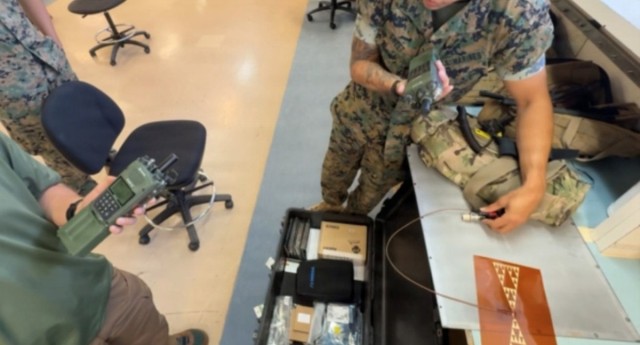
The US Army's DEVCOM Armaments Center has taken a significant step forward in drone manufacturing and repair by incorporating remote 3D printing of electronics. At the recent Valiant Shield exercise, a team from the center demonstrated the ability to print custom flexible antennas using silver inks, despite facing challenges such as environmental factors and equipment damage.
Collaborative Efforts
The team from the Armaments Center worked with Marines from the 3rd Maintenance Battalion and Sciperio, the R&D-focused sister company of nScrypt, to achieve this milestone. The collaboration involved multiple locations, including Schofield Barracks in Oahu, Camp Kinser in Okinawa, and the Armaments Center's headquarters in New Jersey. The team was able to overcome the challenges of working in a remote location with limited resources and achieve successful test runs of the custom antennas.
Challenges and Solutions
The team faced several challenges during the exercise, including:
- Environmental factors such as tropical climate and salt air, which affected the silver inks used in the printing process
- Equipment damage, with multiple printers being damaged en route to the exercise
- The need for Marines to get up-to-speed on the printing process itself
Despite these challenges, the team was able to find solutions and achieve their goals. The successful test runs of the custom flexible antennas demonstrated the potential for remote 3D printing of electronics in drone manufacturing and repair.
Comparison of 3D Printing Technologies
| Technology | Material | Resolution | Speed |
|---|---|---|---|
| nScrypt | Silver ink | 10-100 μm | 1-10 mm/s |
| Sciperio | Conductive ink | 1-10 μm | 0.1-1 mm/s |
| Traditional manufacturing | Metal | N/A | N/A |
Conclusion
The demonstration of remote 3D printing of electronics at Valiant Shield 2026 showcases the US Army's commitment to innovation and forward thinking in drone manufacturing and repair. The successful collaboration between the Armaments Center, Marines, and Sciperio highlights the potential for this technology to revolutionize the way drones are manufactured and repaired.
Bottom Line
The US Army's DEVCOM Armaments Center has taken a significant step forward in remote 3D printing of electronics, demonstrating the ability to print custom flexible antennas using silver inks. Despite facing challenges such as environmental factors and equipment damage, the team was able to achieve successful test runs and showcase the potential for this technology to revolutionize drone manufacturing and repair. With further development and refinement, remote 3D printing of electronics could become a game-changer for the US military and beyond.