- Key Takeaways:
- The Technical University of Denmark (DTU) has patented a novel resin 3D printing concept
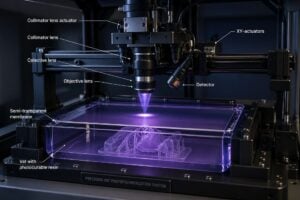
- The concept involves moving the optics instead of exposing a whole layer at once
- This approach targets scanned vat photopolymerization, a specific 3D printing technology
- The patented concept has the potential to improve the efficiency and accuracy of 3D printing
Introduction to Scanned Vat Photopolymerization
Scanned vat photopolymerization is a 3D printing technology that uses a vat of liquid resin to create objects layer by layer. This technology is known for its high resolution and accuracy, but it can be slow and inefficient. The DTU patent aims to address these limitations by introducing a new approach to scanned vat photopolymerization.
The DTU Patent: A Novel Approach
The DTU patent involves moving the optics, which are responsible for curing the resin, instead of exposing a whole layer at once. This approach allows for more precise control over the curing process, resulting in improved accuracy and efficiency. By moving the optics, the DTU concept can reduce the amount of energy required to cure the resin, making it a more sustainable option.
Comparison of 3D Printing Technologies
| Technology | Resolution | Speed | Cost |
|---|---|---|---|
| Scanned Vat Photopolymerization | High (100-200 μm) | Slow (10-50 mm/h) | High ($5,000-$10,000) |
| Stereolithography (SLA) | High (100-200 μm) | Medium (50-100 mm/h) | Medium ($3,000-$6,000) |
| Fused Deposition Modeling (FDM) | Low (200-500 μm) | Fast (100-500 mm/h) | Low ($1,000-$3,000) |
Advantages of the DTU Patent
The DTU patent has several advantages over traditional scanned vat photopolymerization. These include:
- Improved accuracy and resolution
- Increased efficiency and speed
- Reduced energy consumption
- Potential for cost savings
Conclusion
The DTU patent is a significant development in the field of 3D printing. By introducing a novel approach to scanned vat photopolymerization, the DTU concept has the potential to improve the efficiency, accuracy, and sustainability of 3D printing. With its high resolution and precise control over the curing process, the DTU patent is an exciting innovation in the world of 3D printing.
Bottom Line: The Technical University of Denmark's patented resin 3D printing concept is a game-changer for scanned vat photopolymerization. With its improved accuracy, efficiency, and sustainability, this technology has the potential to revolutionize the 3D printing industry. As the industry continues to evolve, it will be exciting to see how the DTU patent is applied and developed in the future.