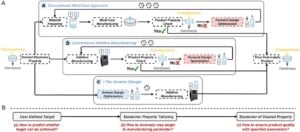
- Key Takeaways:
- i-Tac is an innovative inverse-design workflow for 3D printed tactile elastomers
- This technology enables designers to streamline the prototyping process for soft touch surfaces
- i-Tac allows for the optimization of both optical and haptic properties of 3D printed elastomers
- The workflow has the potential to revolutionize the design and development of tactile interfaces
Introduction to i-Tac
A recent breakthrough in 3D printing technology has led to the development of i-Tac, a novel inverse-design workflow designed specifically for 3D printed tactile elastomers. This innovative approach aims to simplify and accelerate the process of prototyping soft touch surfaces, which are commonly used in various applications, including consumer products, automotive, and medical devices.
How i-Tac Works
The i-Tac workflow utilizes a unique inverse-design approach, which involves reversing the traditional design process. Instead of designing a product and then testing its properties, i-Tac allows designers to specify the desired optical and haptic properties of the 3D printed elastomer and then generates a design that meets those requirements. This approach enables designers to optimize the properties of the material, resulting in improved performance and reduced development time.
Comparison of 3D Printing Technologies
| Technology | Description | Benefits |
|---|---|---|
| i-Tac | Inverse-design workflow for 3D printed tactile elastomers | Streamlined prototyping, optimized optical and haptic properties |
| Traditional 3D Printing | Layer-by-layer printing of materials | Rapid prototyping, increased design complexity |
| Soft Tooling | Manufacturing process for producing soft touch surfaces | High-volume production, reduced costs |
Benefits of i-Tac
The i-Tac workflow offers several benefits, including the ability to optimize both optical and haptic properties of 3D printed elastomers. This enables designers to create materials with specific properties, such as texture, color, and stiffness, which are essential for various applications. Additionally, i-Tac streamlines the prototyping process, reducing the time and cost associated with traditional design and development methods.
Conclusion
The development of i-Tac marks a significant advancement in 3D printing technology, particularly in the field of tactile elastomers. By providing a streamlined and efficient approach to prototyping soft touch surfaces, i-Tac has the potential to revolutionize the design and development of tactile interfaces. With its ability to optimize optical and haptic properties, i-Tac is poised to play a crucial role in the creation of innovative products and applications.
Bottom Line: The i-Tac inverse-design workflow is a groundbreaking technology that simplifies the prototyping process for 3D printed tactile elastomers, enabling designers to create materials with specific optical and haptic properties. With its potential to streamline design and development, i-Tac is set to make a significant impact in various industries, from consumer products to medical devices.