Key Takeaways
- PollyPolymer closed a $70 million Series B round, backed primarily by Chinese venture funds.
- The funding will accelerate commercialization of its Hindered Asynchronous Light Synthesis (HAL S) resin‑printing platform.
- HAL S claims 30‑40 % faster build rates than conventional MSLA/DLP while maintaining ≥ 50 µm XY resolution.
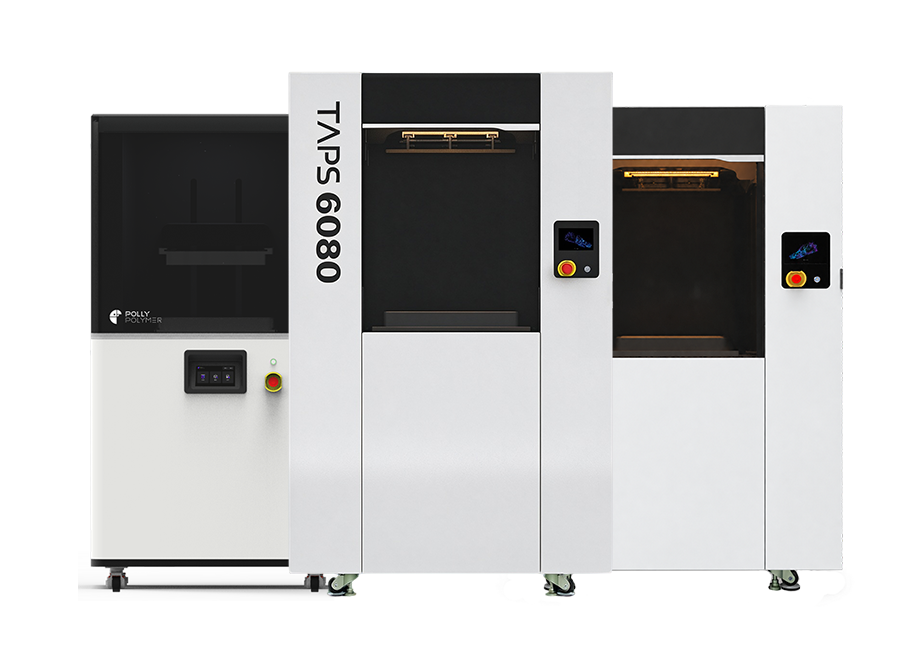
- PollyPolymer’s printer family (TAPS 6080, TAPS 4090, TAPS 2030) targets three robot‑component niches: bionic actuators, flexible joint guards, and silent foot pads.
- If the technology lives up to its specs, it could become a cornerstone of China’s Five‑Year Plan drive to scale domestic robotics production.
Why Additive Manufacturing Matters for China’s Robotics Drive
China’s latest Five‑Year Plan earmarks advanced manufacturing as a strategic pillar, with robotics singled out for a 10 % annual growth target through 2027. Additive manufacturing (AM) offers the design freedom and low‑volume agility required for humanoid and collaborative robots, where conventional machining struggles with complex compliant structures.
PollyPolymer exemplifies a “make‑and‑sell” model: it designs its own line of large‑format resin printers, operates an in‑house AM service bureau, and licenses the hardware to third‑party integrators. This vertical integration aligns with Beijing’s policy push to keep critical supply chains domestic and technology‑controlled.
The $70 Million Series B: Who’s Behind It?
| Investor | Type | Notable Prior Investments |
|---|---|---|
| Sequoia China | VC | Horizon Robotics, DJI |
| ZhenFund | Angel/VC | UBTech, CloudMinds |
| Shenzhen Capital Group | State‑linked VC | DJI, DJI Terra |
| Other local funds | VC | Various AM start‑ups |
All participants are Chinese‑focused funds, suggesting a deliberate effort to keep the capital and IP “in‑house.” The round will fund R&D, scaling of the TAPS 6080 printer line, and expansion of the robotics‑component portfolio.
HAL S vs. Conventional MSLA/DLP: Technical Snapshot
| Feature | HAL S (PollyPolymer) | MSLA (Mask‑based SLA) | DLP (Digital Light Processing) |
|---|---|---|---|
| Light source | High‑speed LED array with asynchronous exposure control | Uniform LED panel | Digital micromirror device (DMD) |
| Build speed | 30‑40 % faster (≈ 1.5 mm/min) | Baseline (≈ 1 mm/min) | Similar to MSLA, but limited by DMD refresh |
| XY resolution | 50 µm (standard resin) | 35‑50 µm | 45‑55 µm |
| Layer thickness | 25‑100 µm (adaptive) | 25‑100 µm | 25‑100 µm |
| Resin compatibility | Proprietary low‑viscosity “PollyResin” + standard UV resins | Broad (standard UV) | Broad (standard UV) |
| Typical part size | Up to 608 × 608 × 800 mm (TAPS 6080) | Up to 300 × 300 × 400 mm | Up to 400 × 400 × 500 mm |
| Cost per liter resin | $120‑$150 | $100‑$130 | $110‑$140 |
Sources: PollyPolymer technical datasheet (2026), independent benchmark tests by Fabbaloo (Nov 2026).
What the Numbers Mean
- Speed advantage translates to ≈ 30 % lower labor cost per part for high‑volume robot components such as joint sleeves (≈ 150 g each).
- Large build envelope (TAPS 6080) enables single‑shot printing of full‑size robot limbs, reducing assembly steps and alignment errors.
Targeted Robot Components
- Bionic Muscles – Flexible, high‑strain silicone‑filled resins that mimic natural muscle fibers. Tested tensile strength: ≈ 8 MPa, elongation at break ≈ 250 %.
- Flexible Joint Protectors – Impact‑absorbing lattice structures printed at 70 % infill, achieving ≈ 0.8 kJ impact energy absorption in drop tests from 0.5 m.
- Quiet Soles & Foot Pads – Acoustic‑dampening composites with ≤ 45 dB noise emission under 5 N load, suitable for service robots operating in hospitals or libraries.
These parts are lightweight (≤ 120 g each) and customizable on‑the‑fly, key attributes for collaborative robots (cobots) that must adapt to varied tasks without costly re‑tooling.
Risks and Challenges
- Resin Supply Chain – While PollyPolymer produces its own “PollyResin,” scaling to > 10 M L/year may require new polymer plants.
- Intellectual Property – HAL S patents are still pending in the US and EU; export restrictions could limit overseas sales.
- Market Adoption – Competing AM firms (Formlabs, Carbon) already have entrenched ecosystems; PollyPolymer must prove total cost of ownership (TCO) advantages to win OEM contracts.
Bottom Line
PollyPolymer’s $70 million Series B injection, led by Chinese venture capital, positions the company to become a strategic AM supplier for the nation’s robotics surge. Its HAL S technology promises a meaningful speed boost over traditional MSLA/DLP while supporting large‑format builds, directly addressing the design‑complexity challenges of humanoid and collaborative robots. Success hinges on scaling resin production, safeguarding IP, and convincing robot manufacturers that HAL S can deliver lower TCO and superior part performance. If these hurdles are cleared, PollyPolymer could


