Key Takeaways
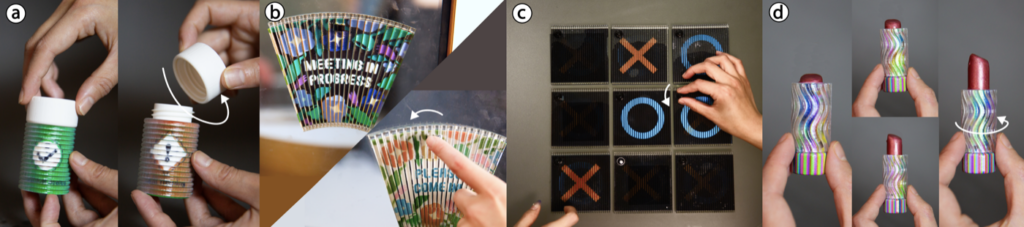
- A new 3D printing system, ShiftLens, enables the creation of interactive objects that change appearance based on user interaction without electronics.
- The system utilizes small, controlled mechanical shifts and optical layers to achieve this functionality.
- Objects created with ShiftLens can be printed on a multimaterial machine and do not require electronic circuits to operate.
- Potential applications include packaging that alerts users if fasteners have come loose.
Introduction to ShiftLens
The development of interactive objects has traditionally relied on the use of electronics, such as LEDs and screens. However, these electronics can be prone to damage when exposed to environmental stressors or excessive force. To address this limitation, a team of researchers at MIT has developed a novel 3D printing system called ShiftLens.
How ShiftLens Works
ShiftLens employs a combination of built-in mechanical parts and specially arranged optical layers to create interactive objects. When a user interacts with the object, such as turning, pressing, or sliding it, the mechanical parts shift, causing a change in the object's surface appearance. This is achieved without the need for electronic circuits or sensors.
Comparison of ShiftLens with Traditional Methods
| Method | Description | Advantages | Disadvantages |
|---|---|---|---|
| Traditional Electronics | Uses LEDs, screens, and sensors to create interactive objects | High interactivity, wide range of applications | Prone to damage, limited durability |
| Surface Optics | Uses static labels or curved lenses to create visual effects | Low cost, simple implementation | Limited interactivity, static appearance |
| ShiftLens | Uses mechanical shifts and optical layers to create interactive objects | High durability, no electronics required | Limited to specific applications, complex implementation |
Applications and Potential
The ShiftLens system has the potential to create a wide range of interactive objects, from packaging that alerts users to loose fasteners to devices that provide tactile feedback. According to Yunyi Zhu, a graduate student at MIT and lead author of the paper on ShiftLens, "With our system, an object can tell you whether you are using it properly, without the need for sensors or any complicated electronics."
Conclusion
The ShiftLens 3D printing system represents a significant advancement in the development of interactive objects. By utilizing mechanical shifts and optical layers, ShiftLens enables the creation of durable, interactive objects that do not require electronic circuits to operate.
Bottom Line
The ShiftLens system has the potential to revolutionize the way we interact with objects, enabling the creation of intuitive, self-contained devices that can provide feedback and guidance without the need for complex electronics. With its high durability and wide range of potential applications, ShiftLens is an exciting development in the field of 3D printing and interactive design.