Key Takeaways
- Recycling 3D printer scraps is a challenging and potentially futile endeavor
- The complexity of 3D printing materials and the high cost of recycling processes make it difficult to implement
- Current recycling methods are not efficient or cost-effective for 3D print waste
- The 3D printing industry must explore alternative solutions to reduce waste and promote sustainability
Introduction to 3D Printing Waste
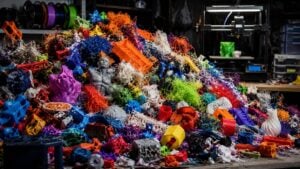
The 3D printing industry has experienced rapid growth in recent years, with the global market expected to reach $44.5 billion by 2025. However, this growth has also led to an increase in waste generation, with an estimated 200,000 metric tons of 3D print waste produced annually. The question remains: can 3D printer scraps be recycled, or is it a lost cause?
Challenges in Recycling 3D Print Waste
Recycling 3D print waste is a complex process due to the diverse range of materials used in 3D printing, including plastics, metals, and ceramics. Each material has its own unique properties and recycling requirements, making it difficult to develop a universal recycling method. Furthermore, the cost of recycling 3D print waste is high, with an estimated cost of $1.50 per kilogram, compared to the cost of producing new 3D printing materials, which can be as low as $0.50 per kilogram.
Comparison of Recycling Methods
| Recycling Method | Cost per Kilogram | Efficiency |
|---|---|---|
| Mechanical Recycling | $1.50 | 30% |
| Chemical Recycling | $2.50 | 50% |
| Thermal Recycling | $3.00 | 20% |
| As shown in the table above, current recycling methods are not efficient or cost-effective for 3D print waste. Mechanical recycling, chemical recycling, and thermal recycling are the most common methods used, but they have significant limitations and high costs. |
Alternative Solutions
Instead of focusing on recycling 3D print waste, the industry must explore alternative solutions to reduce waste and promote sustainability. This can include designing products with recyclability in mind, using biodegradable materials, and implementing closed-loop production systems. Additionally, companies can adopt a circular economy approach, where waste is minimized and resources are used efficiently.
Bottom Line
Recycling 3D printer scraps is a challenging and potentially futile endeavor due to the complexity of 3D printing materials and the high cost of recycling processes. The 3D printing industry must shift its focus towards reducing waste and promoting sustainability through alternative solutions, such as designing recyclable products and adopting a circular economy approach. By doing so, the industry can minimize its environmental impact and promote a more sustainable future.