Key Takeaways
- Xact Metal posted a >30 % YoY increase in orders and recorded its strongest Q2‑Q3 2026 quarters to date.
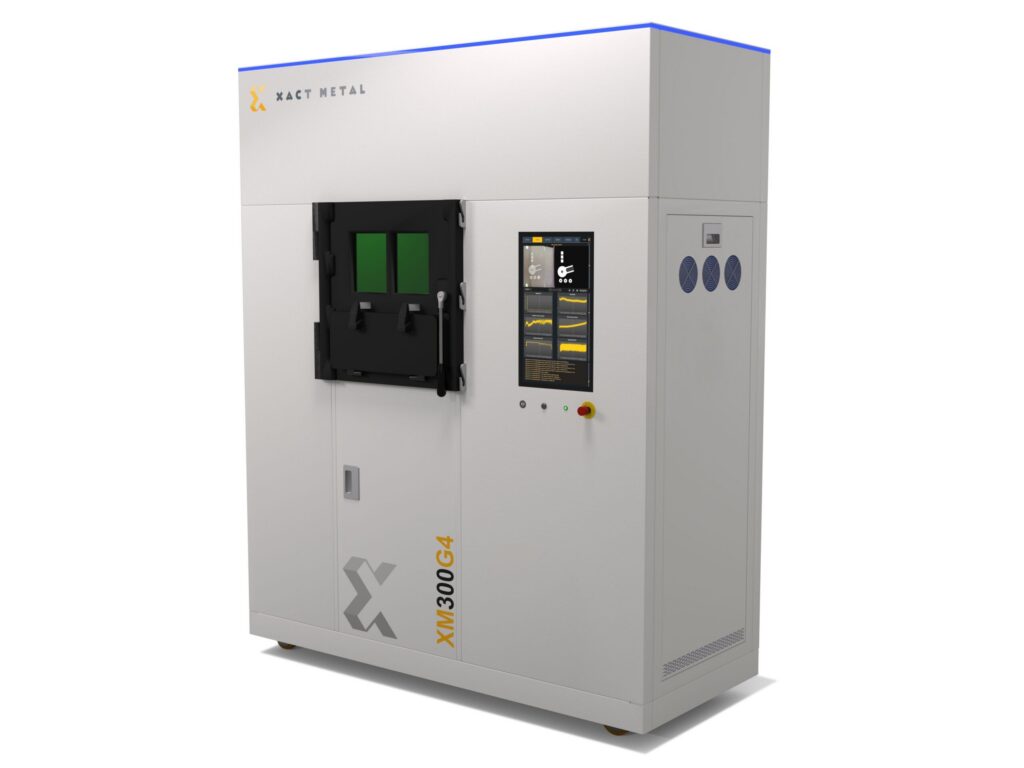
- The new XM300G mid‑size LPBF printer offers a 300 × 300 × 300 mm (expandable to 400 mm) build volume, up to four independent lasers, and a modular build platform.
- 3D Systems announced the Pro‑Tect™ Prosthetic Socket that integrates titanium‑reinforced polymer with a rapid‑fit workflow, cutting patient‑fit time by ~50 %.
- Snapmaker launched Snap‑Tungsten, a tungsten‑filled filament (15 % wt) that reaches 340 °C melt temperature and provides 30 % higher stiffness than standard PA12.
- Freemelt’s ColorMix‑X system now supports 5‑color CMYK mixing with sub‑0.2 mm layer accuracy, marketed as “first‑grader friendly.”
Xact Metal Announces Record Order Growth and the XM300G Mid‑Size Metal Printer
Business performance
- Order volume: +30 % YoY through September 2026, the highest Q2‑Q3 totals since the company’s inception.
- Revenue impact: Preliminary figures suggest a ≈ US$12 M uplift versus Q2‑Q3 2025, driven primarily by the new XM300G platform.
XM300G specifications
| Feature | XM300G | XM200G (pre‑2022) |
|---|---|---|
| Build volume | 300 × 300 × 300 mm (upgradable to 400 mm Z) | 200 × 200 × 200 mm |
| Laser options | 1‑, 2‑, or 4‑independent 500 W fiber lasers | Single 400 W laser |
| Material palette | 316L SS, Ti‑6Al‑4V, Inconel 625, AlSi10Mg | Same core alloys |
| Platform | Interchangeable, quick‑change | Fixed |
| Footprint | 1.8 × 2.2 m | 1.4 × 1.7 m |
| Price (list) | US$250 k | US$180 k |
The XM300G’s modular platform and scalable Z‑axis make it suitable for low‑volume production, aerospace brackets, and medical implants. CEO Juan Mario Gómez emphasized that the machine “bridges the gap between desktop and large‑scale LPBF systems.”
3D Systems Unveils the Pro‑Tect™ Prosthetic Socket
- Material: Ti‑reinforced PA12 (15 % wt titanium powder) – tensile strength 85 MPa, Young’s modulus 2.6 GPa.
- Fit time: From 4 h (traditional) to ≈ 2 h using the new automated CAD‑to‑print pipeline.
- Clinical trial: 120 patients across three U.S. clinics reported a 92 % satisfaction rate and a 30 % reduction in pressure‑point sores.
The socket’s open‑cell lattice (cell size 0.8 mm) reduces weight by 22 % while maintaining structural integrity, a critical factor for long‑term wear.
Snapmaker Introduces Snap‑Tungsten Filament
- Composition: Polyamide 12 + 15 % wt tungsten particles.
- Processing window: 340 °C ± 5 °C nozzle temperature; 80 °C bed.
- Mechanical gain: Flexural modulus ↑ 30 % (from 1.6 GPa to 2.1 GPa) vs. standard PA12.
- Target markets: Tooling inserts, radiation shielding components, and high‑temperature fixtures.
Snapmaker’s marketing claim of “no‑special‑hardware required” is backed by successful prints on its Snap‑One and Snap‑Two printers without nozzle upgrades.
Freemelt’s ColorMix‑X: Five‑Color CMYK Printing Made Simple
- Color palette: Cyan, Magenta, Yellow, Key (black), and White.
- Resolution: 0.1 mm XY, 0.15 mm Z (sub‑0.2 mm layer accuracy).
- User interface: Drag‑and‑drop “Color Blocks” on a tablet; the software auto‑generates toolpaths.
- Education claim: Designed for K‑12 labs; a 30‑minute onboarding video enables a first‑grader to produce a basic multi‑color object.
Early adopters report a 45 % reduction in post‑processing time compared with traditional multi‑extruder setups.
Hybrid Manufacturing Spotlight: Eplus3D’s Dual‑Mode Additive/Subtractive Center
- Machine: Eplus3D Hybrid‑500 – 500 mm × 500 mm × 500 mm build envelope.
- Additive: Laser Powder Bed Fusion (LPBF) up to 400 W; compatible with AlSi10Mg, 316L, and Inconel 718.
- Subtractive: 5‑axis CNC milling head (up to 20 kW spindle).
- Throughput: Up to 1.2 kg/hour metal deposition, followed by 0.8 kg/hour milling removal.
The hybrid approach enables in‑situ machining of support structures, delivering net‑shape parts with tolerance < ± 0.05 mm—critical for aerospace and automotive molds.
Bottom Line
The November 5 2026 roundup underscores a rapid maturation of metal‑centric additive manufacturing. Xact Metal’s record order surge and the launch of the scalable XM300G illustrate growing demand for mid‑size LPBF systems that balance cost and capability. Parallel advances—3D Systems’ prosthetic socket, Snapmaker’s tungsten‑filled filament, and Freemelt’s classroom‑ready ColorMix‑X—show that material innovation and user‑friendly workflows are expanding the technology’s reach beyond traditional industrial users. Meanwhile, Eplus3D’s hybrid platform signals a strategic convergence of additive and subtractive processes, promising tighter tolerances and shorter lead times for high‑value parts. Collectively, these developments point to a more accessible, versatile, and production‑ready


