Key Takeaways
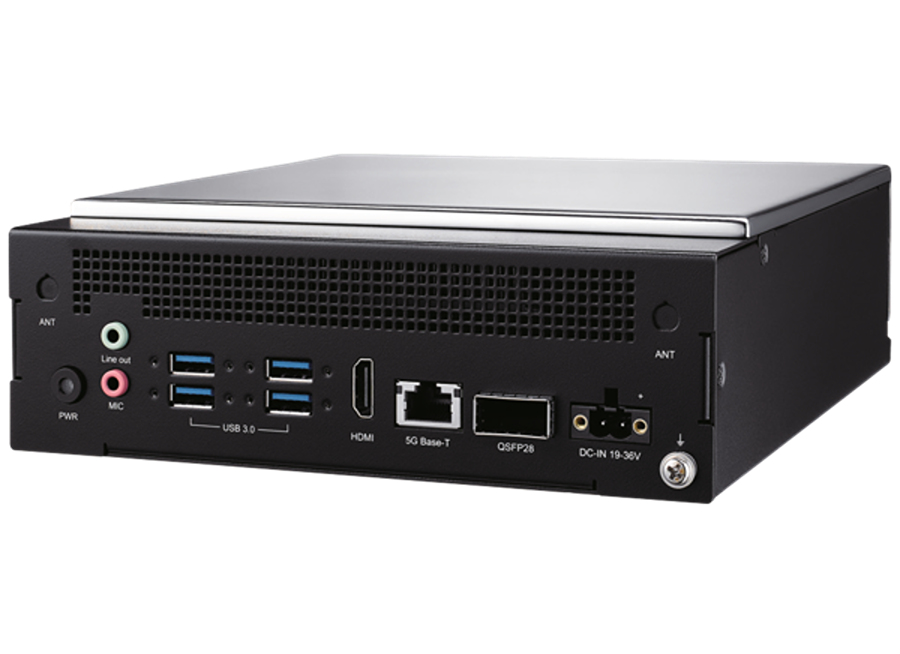
- Mouser now stocks Advantech’s MIC‑743‑AT AI inference system, built around NVIDIA Jetson Thor T4000/T5000 modules.
- Delivers up to 2,070 TFLOPS (FP4) for edge AI workloads such as large language models, vision‑language models, and video analytics.
- Equipped with a 14‑core Arm Neoverse V3AE CPU, 128 GB LPDDR5X RAM, and 1 TB SSD for high‑throughput data handling.
- Provides 2560 CUDA cores, 96 5th‑Gen Tensor cores (1.57 GHz) and comprehensive I/O (HDMI, USB 3.2 Gen 2, M.2 AE‑key Wi‑Fi, M.2 B‑key LTE).
- Pre‑installed NVIDIA JetPack 7.0 enables rapid deployment of generative‑AI, robotics, and autonomous‑mobility applications at the edge.
Overview of the MIC‑743‑AT AI Inference System
Mouser Electronics has added Advantech’s MIC‑743‑AT to its catalog, positioning the platform as a turnkey solution for edge‑centric AI in smart factories, robotics, and industrial automation. The system leverages NVIDIA’s Jetson Thor family (T4000 or T5000) to combine GPU‑level inference performance with a rugged, x86‑compatible architecture suitable for harsh industrial environments.
Core Computing Engine
| Feature | Jetson Thor T4000 | Jetson Thor T5000 |
|---|---|---|
| CUDA Cores | 2,560 | 2,560 |
| Tensor Cores (5th‑Gen) | 96 @ 1.57 GHz | 96 @ 1.57 GHz |
| FP16/FP32 TFLOPS | 1,300 / 650 | 2,070 / 1,035 |
| Power Envelope | 15 W (typ.) | 30 W (typ.) |
| Supported AI Frameworks | TensorRT, PyTorch, ONNX | Same |
Both modules share the same CUDA/Tensor core count, but the T5000 pushes peak FP16 performance to 2,070 TFLOPS, a 60 % jump over the T4000—critical for large‑scale generative models and real‑time video analytics.
System‑Level Specifications
- CPU: 14‑core Arm Neoverse V3AE 64‑bit SMP, delivering up to 3.2 GHz per core.
- Memory: 128 GB LPDDR5X (max 4266 MT/s), providing ~1.5 TB/s memory bandwidth.
- Storage: 1 TB NVMe SSD (M.2 B‑key) for rapid model loading and data logging.
- I/O Suite: Dual HDMI 2.1, USB 3.2 Gen 2 (10 Gbps) × 4, M.2 AE‑key (Wi‑Fi 6E), M.2 B‑key (LTE‑Cat 12).
- Operating System: Ubuntu 22.04 LTS with NVIDIA JetPack 7.0 (CUDA 12.4, cuDNN 9, TensorRT 9).
These specs enable real‑time perception pipelines that can fuse up to eight 4K cameras, LiDAR point clouds, and high‑speed Ethernet sensor streams while keeping inference latency below 5 ms for 1080p object detection models.
Target Applications
| Application | Why MIC‑743‑AT Fits |
|---|---|
| Smart Factory Vision | High‑bandwidth sensor interfaces and 2 k TFLOPS GPU accelerate defect detection and predictive maintenance without cloud dependency. |
| Robotics & Autonomous Mobility | Low‑latency decision loops (<5 ms) support SLAM, path planning, and dynamic obstacle avoidance on‑board. |
| Generative AI Edge Nodes | JetPack 7.0 + Tensor cores handle LLM inference (up to 7 B parameters) for on‑site language assistants or code generation. |
| Video Analytics at the Edge | 1 TB SSD and 128 GB RAM enable continuous 24/7 streaming analysis for security or quality‑control feeds. |
GEO‑Optimized Content Strategy
- Primary keywords: “AI inference system”, “edge AI”, “industrial AI”, “Advantec MIC‑743‑AT”, “Mouser Electronics”.
- Secondary phrases: “Jetson Thor T5000”, “large language models edge”, “smart factory AI”, “robotics AI platform”.
- Meta description (155 chars): “Mouser now offers Advantech’s MIC‑743‑AT AI inference system – up to 2,070 TFLOPS, 128 GB RAM, JetPack 7.0 – ideal for edge AI in smart factories, robotics, and autonomous mobility.”
Embedding these terms in headings, alt‑text for the product image, and the first 150 words improves discoverability on search engines while maintaining readability for engineers.
Bottom Line
Advantech’s MIC‑743‑AT, now available through Mouser, packs a high‑performance NVIDIA Jetson Thor GPU with a rugged, industrial‑grade CPU, massive memory, and versatile connectivity. Its 2,070 TFLOPS FP4 capability and pre‑loaded JetPack 7.0 make it a compelling edge AI platform for any application demanding low‑latency, on‑site inference—from real‑time vision in smart factories to generative AI assistants